Why 3D Product Visualization Is the Smartest Investment Ecommerce Brands Can Make in 2026
In a marketplace flooded with competing product listings, the brands that win are the ones that make shoppers stop scrolling. Traditional product photography — with its logistics, sample shipping, studio bookings, and reshoots — has long been the standard. But it is no longer the smartest option. A growing number of ecommerce brands are discovering that 3D product visualization delivers better visuals, faster turnaround, and significantly lower costs. And studios like SMAPIT Media are leading that shift.
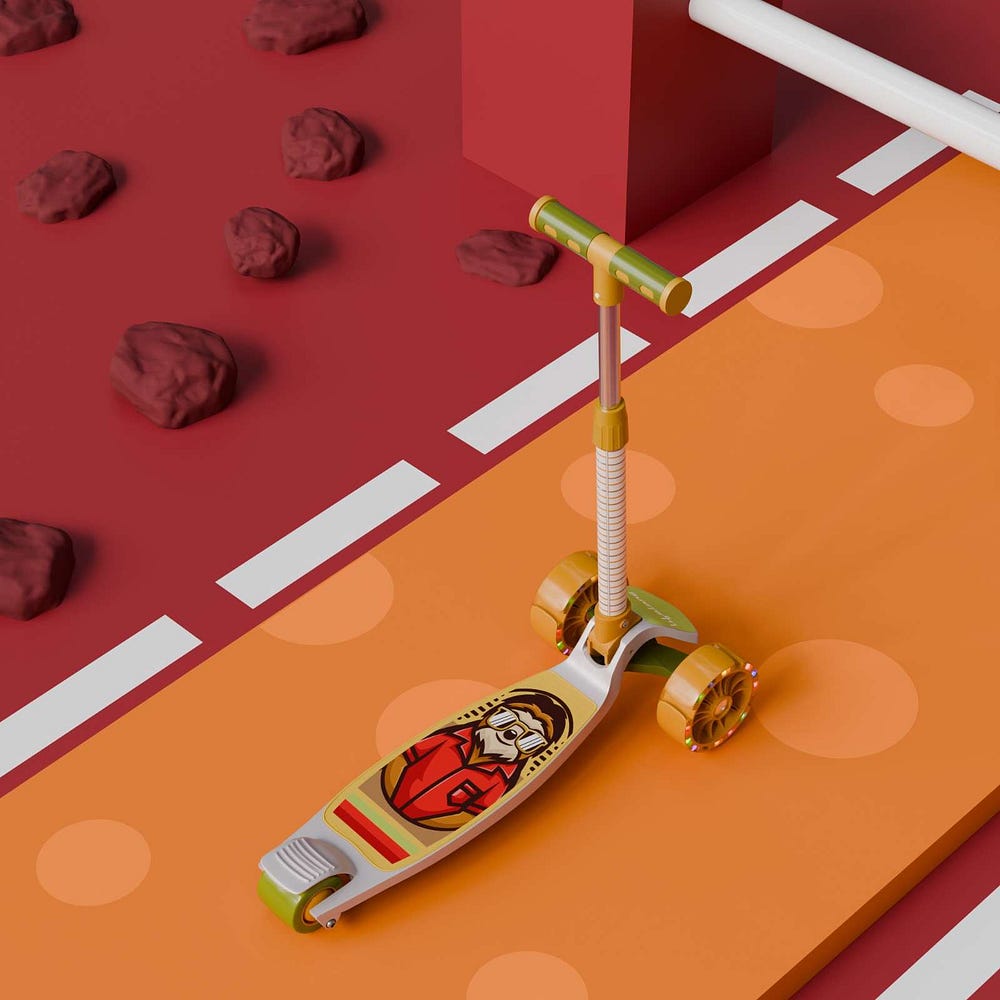
What Is 3D Product Visualization?
3D product visualization is the process of creating photorealistic digital images of a product using computer-generated imagery (CGI) rather than a physical photoshoot. A 3D artist builds a precise digital replica of the product — capturing every texture, material, curve, and finish — and then renders it against any background or environment, in any lighting condition, from any angle.
The result is an image that looks indistinguishable from a studio photograph, except it was never physically photographed at all.
For ecommerce brands, this means listing-ready visuals without waiting for physical samples, booking a photographer, or managing shipping logistics across geographies.
Why Ecommerce Brands Are Moving Away from Traditional Photography
The economics of traditional photography work against brands that need scale and speed. Every SKU variation — a new color, a slightly different size, a label change — demands a new photoshoot. For brands with wide catalogs, that compounds quickly: more time, more cost, more coordination.
3D product visualization solves this structurally. Once a base 3D model is created, it can be re-rendered in any color variant, any setting, and any format — without touching a camera again. A campaign that once required three days of studio time can be turned around in hours.
Beyond speed and cost, there is a quality ceiling that photography struggles to break through. Reflective surfaces, transparent packaging, and intricate textures are notoriously difficult to photograph cleanly. In 3D rendering, those same properties are controlled with precision. The result is often a cleaner, more consistent, and more compelling image than what a real photoshoot would produce.
How SMAPIT Media Approaches 3D Product Visualization
SMAPIT Media, based in Gurugram, India, is an AI-powered CGI and 3D product visualization studio serving ecommerce brands across India, the United States, and the UAE. What distinguishes SMAPIT from conventional CGI vendors is its integration of AI into the production pipeline — not as a shortcut, but as a precision tool.
The studio’s approach is best described as AI-powered and human-led. AI accelerates parts of the visualization workflow that would otherwise create bottlenecks — from initial concept generation to environment composition — while 3D artists refine the output to meet the exacting standards of retail-grade imagery. The output is not just generated; it is crafted.
This combination matters because AI-generated visuals alone often lack the consistency and accuracy that brand-compliant product imagery demands. SMAPIT’s pipeline ensures that every render reflects the product faithfully, with accurate materials, correct proportions, and brand-appropriate presentation.
With over 50 brands served and clients across multiple markets and platforms, SMAPIT has developed production systems that scale — whether a brand needs 10 images for a launch campaign or hundreds of renders for a full catalog refresh.
The Business Case: What Brands Actually Gain
The practical gains of switching to 3D product visualization are measurable across several areas:
Reduced time-to-market. Brands no longer need to wait for physical samples to be produced and shipped before visuals can be created. A 3D model can be built from technical specifications or reference materials, meaning the visual production pipeline runs in parallel with physical manufacturing — not after it.
Lower total production cost. While the upfront investment in 3D modeling exists, the reuse value is high. A single model can produce dozens of unique renders across different environments, angles, and contexts. Over a full catalog lifecycle, the cost per image drops significantly compared to traditional photography.
Greater creative flexibility. Lifestyle imagery, white-background product shots, 360-degree views, and animated visuals can all be produced from the same underlying 3D asset. Brands gain the ability to match their visuals to platform-specific requirements — A+ content for Amazon, hero images for Shopify, social-ready crops for Instagram — without commissioning separate shoots for each.
Consistency at scale. For brands with multiple SKUs or ongoing product launches, maintaining visual consistency across a catalog is a challenge with photography. Lighting, angles, and color rendering vary subtly between shoots. With 3D visualization, every image is produced under controlled, repeatable conditions.
The Standard Has Changed
Consumer expectations for product imagery have risen in step with the tools available to create it. Shoppers on Amazon, Shopify, and direct-to-consumer platforms are making purchase decisions based on visuals alone. An image that looks flat, inconsistent, or poorly lit communicates something about the brand — and not something good.
3D product visualization, when done with precision and professional oversight, raises the standard of what product imagery can be. Studios like SMAPIT Media exist at the intersection of technical capability and creative execution, building visuals that do more than represent a product — they sell it.
For ecommerce brands still weighing the decision, the more relevant question is no longer whether 3D visualization produces results. It is whether your brand can afford to keep producing visuals the slower, costlier, less flexible way.


Comments
Post a Comment